
Every business in Qatar is sitting on a compliance time bomb, and most of them don’t know it yet. Choosing the right e-waste recycling company is no longer a nice-to-have decision. It’s a business continuity decision.
Old servers piling up in a storage room. Batteries were pulled from a UPS unit three months ago and are still sitting in a corner. A stack of decommissioned laptops with no clear disposal plan. Sound familiar? If your business operates in Doha and you’ve been pushing the e-waste question to next quarter, this is the moment to stop doing that.
Qatar’s regulatory environment around electronic waste disposal is tightening. Businesses that get this wrong don’t just face environmental consequences. They face documentation gaps, compliance failures, and serious risk to their operating status.
Table of Contents
What Counts as E-Waste Under Qatar’s Framework?
This trips people up more than you’d expect. E-waste, or WEEE (Waste Electrical and Electronic Equipment), covers a much broader range than most operations managers assume.
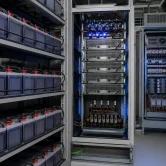
In Qatar’s regulatory context, this includes UPS systems, battery banks (VRLA, lithium-ion, flooded lead-acid, and nickel-cadmium), servers, rectifiers, switchgear, data centre equipment, and general electrical infrastructure that has reached end-of-life. If it had a circuit board, a battery, or a power system and it no longer functions in your operation, it qualifies.
The Ministry of Environment and Climate Change in Qatar has been working within a GCC-wide framework that treats improper disposal of hazardous electronic materials as a regulatory breach. This is not a soft rule. Lead, cadmium, and mercury from improperly discarded batteries can cause lasting environmental damage, and Qatar’s Vision 2030 goals are directly tied to reducing exactly that kind of industrial footprint.
Why Businesses Get Caught Out on Compliance
Most businesses don’t fail on e-waste compliance because they’re negligent. They fail because they don’t know what proper documentation looks like.
Regulatory compliance in Qatar requires more than physically handing equipment over to a third party. You need a documented chain of custody. That means disposal certificates, audit trails, and records that prove hazardous materials were handled according to local and GCC environmental standards.
If you’re operating in a facility pursuing GSAS (Global Sustainability Assessment System) certification, the documentation requirements go even deeper. GSAS certification in Qatar requires that disposal and recycling activities be recorded, traceable, and aligned with recognised environmental standards. One missing disposal certificate can hold up an entire certification process.
The other common failure point is assuming that any recycler will do. Not every company offering e-waste collection in Qatar operates with the full compliance documentation that a business audit would require. This is where vetting your chosen e-waste recycling company properly matters enormously.
The Battery Disposal Problem Is Bigger Than You Think
Battery waste is where the risk concentrates for most commercial and industrial operations in Qatar.
VRLA batteries from UPS systems. Lithium packs from backup power infrastructure. Nickel-cadmium cells from older telecom systems. These materials are classified as hazardous under most international frameworks, and Qatar’s environmental standards reflect that. You cannot put them in general waste. You cannot store them indefinitely on-site without a management plan. And you certainly cannot ship them without proper documentation.
Techlinqx operates battery recycling programmes in Qatar that cover the full range of battery chemistries, from VRLA and flooded lead-acid to lithium-ion and nickel-cadmium. Their process includes documented handling, appropriate hazardous material separation, and compliance reporting aligned with Qatar environmental regulations.
What makes this relevant beyond just the recycling step is asset recovery. Before a battery bank goes to disposal, there’s often recoverable value in the components. An asset recovery programme lets businesses extract that residual value rather than writing off the entire asset, which changes the economics of responsible disposal significantly.
How to Evaluate an E-Waste Recycling Company in Qatar
Not all recyclers operate the same way. Here’s what to look at when you’re assessing a partner for your business.
First, documentation capability. Can they provide disposal certificates for each collection? Is there a clear audit trail from pickup through final processing? For any business that needs to demonstrate compliance to an auditor or a certification body, this is non-negotiable.
Second, regulatory knowledge. Qatar and GCC environmental regulations have specific requirements around hazardous material handling. Your recycling partner needs to understand those requirements, not just offer a general service. A company that handles equipment disposal across Doha needs to operate within documented, compliant processes.
Third, scope of service. If your operation runs data centre infrastructure, UPS systems, battery storage, and general IT equipment, you want a partner who can manage the full picture, not just one category. Fragmented disposal across multiple vendors creates compliance gaps.
Techlinqx provides equipment disposal services covering UPS systems, rectifiers, servers, switchgear, and full data centre decommissioning across Doha and the wider Qatar market, with traceable documentation from collection through end-of-life processing.
Qatar National Vision 2030 and What It Means for Your Operation Right Now
This is the piece that many businesses treat as background noise. It shouldn’t be.
Qatar’s National Vision 2030 sets specific sustainability and environmental targets at a national level. That framework filters down into regulatory expectations for businesses operating in Qatar, particularly those in the commercial, industrial, and infrastructure sectors.
If your operation contributes to e-waste without a compliant disposal programme, you’re working against that framework. And as sustainability reporting becomes a standard part of business accountability in the GCC region, having no documented environmental compliance posture becomes a liability.
Techlinqx’s sustainability and environmental commitment programmes are built around this reality. Their carbon reduction initiatives, energy audit services, and compliance documentation support are all structured to align with Qatar National Vision 2030 goals, including GSAS certification assistance for facilities that need it.
Final Thoughts
E-waste compliance in Qatar is one of those topics where the cost of ignoring it is much higher than the cost of getting it right. A documented disposal programme, a reliable e-waste recycling company with proper certification support, and a clear audit trail protect your business on multiple fronts: regulatory, environmental, and reputational.
The question worth asking your operations team today is simple: if a compliance auditor asked for your e-waste disposal records from the last two years, what would you hand them?
If the answer is anything other than a complete file, now is a good time to change that.