
Walk into almost any telecom site in Qatar — a base station, a data cabinet, an exchange room — and the backup power running underneath it is almost certainly 48V DC. It’s been the industry standard for decades, and there’s a reason it hasn’t changed. If you’re specifying a new site or reviewing an existing one, understanding why this voltage was chosen and what actually goes into a 48V system changes how you evaluate the equipment in front of you.
What Is a 48V DC Battery System?
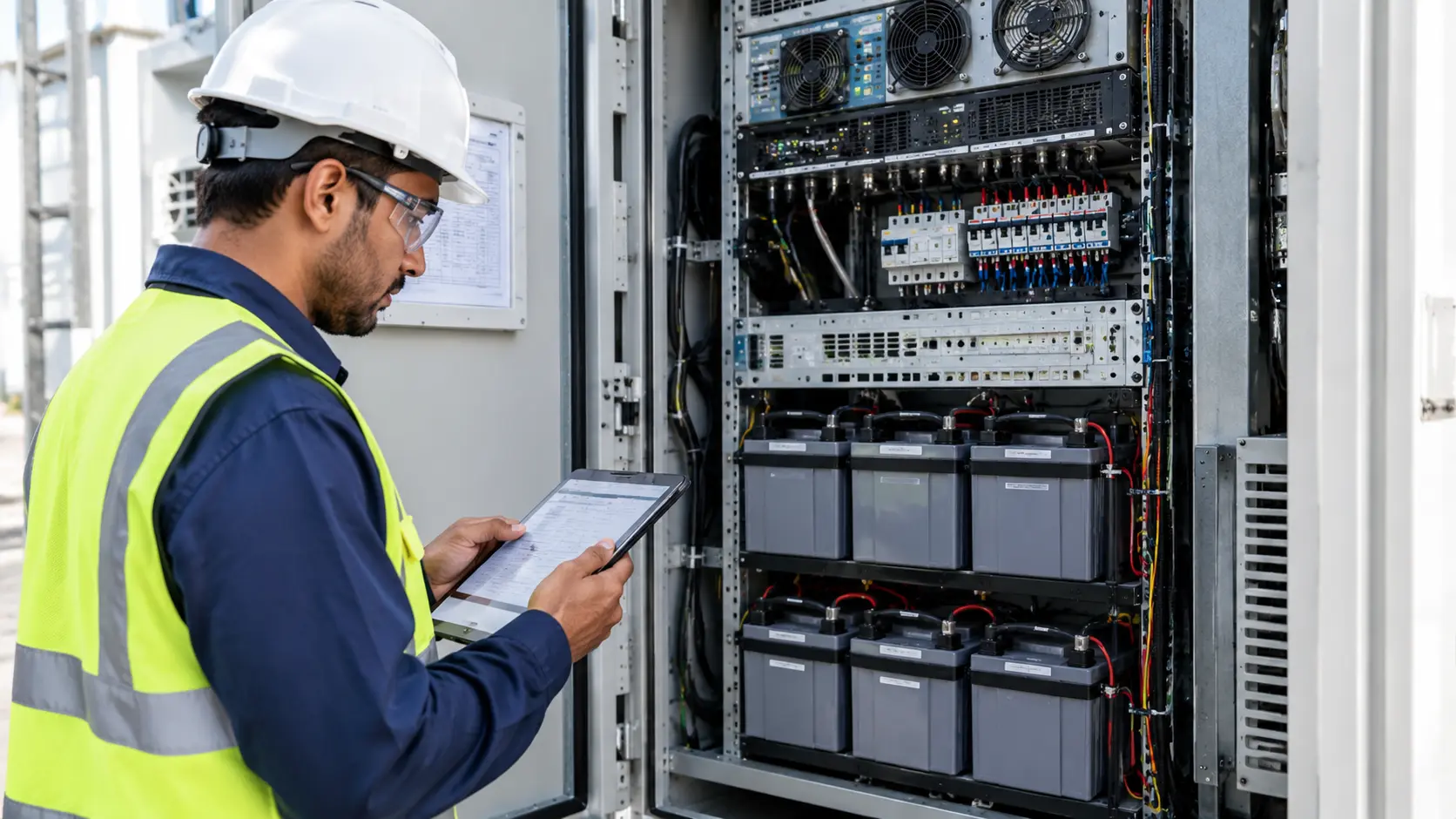
A 48V DC system is the backup power setup that keeps telecom equipment running when the grid drops. It has three core parts: rectifiers that convert incoming AC power to DC and charge the batteries; the battery bank itself (usually 24 cells of 2V, or 4 blocks of 12V, wired to reach 48V nominal); and a DC distribution unit that feeds the load – base station equipment, transmission gear, routers, or whatever the site is carrying.
When grid power is present, the rectifiers power the site directly and top up the batteries. When it drops, the batteries take over instantly, with no switchover delay, because the load was already running on DC.
Why Telecom Runs on 48V DC
Safety Margins
48V sits below the threshold generally considered hazardous to touch under normal conditions. Technicians can work on live DC distribution without the same lockout procedures a higher voltage system would demand, which matters on sites that need frequent maintenance access.
Equipment Standardization
Nearly every piece of telecom equipment – base stations, routers, and transmission systems – is built to run on 48V DC input. It’s been the standard long enough that manufacturers design around it by default, which keeps procurement and spares simpler across a multi-vendor site.
No Switchover Delay
Because equipment runs on DC already, there’s no AC-to-DC conversion delay when the grid fails. The battery bank is already in the circuit, floating alongside the rectifiers, so the handover is instant. For a cellular site, that’s the difference between a clean failover and a dropped call.
VRLA vs Lithium: Which Battery Fits a 48V System?
Both chemistries can be configured for 48V, but they behave differently once Qatar’s heat gets involved.
Quick Comparison
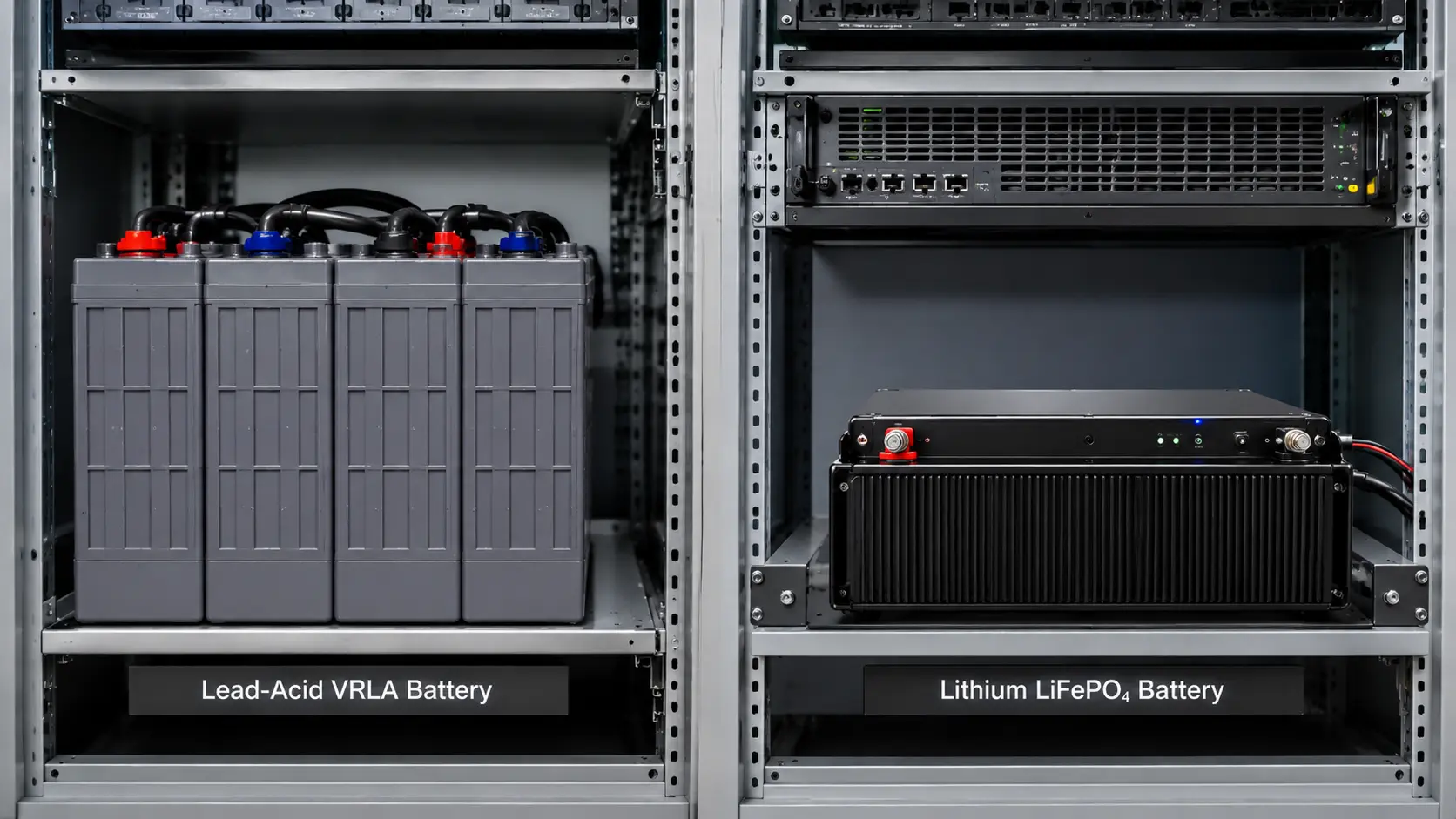
VRLA (lead-acid):Lower upfront cost. Well understood, widely available. Rated life drops fast above 30–35°C — often down to 2–3 years in an unmanaged Qatar site. Heavier, needs more physical space.
Lithium (LiFePO₄):Higher upfront cost. Handles heat with far less capacity loss. Roughly a third of the weight and footprint of VRLA for the same capacity. Longer service life, often 8–10 years even in hot climates.
For a site with reliable cooling and easy access for battery swaps, VRLA can still make financial sense. For remote or hard-to-access sites, which describes a lot of Qatar’s tower and cabinet locations’ lithium heat tolerance often pays for itself in fewer truck rolls and replacement cycles.
Sizing a 48V DC System for Qatar’s Climate
Sizing isn’t just about matching load in amps. Three things specific to Qatar change the calculation.
Runtime requirements need to account for degraded battery capacity at high temperatures, not the datasheet’s 25°C rating. A bank sized to cover a 4-hour outage at rated capacity might only deliver 2.5–3 hours once ambient heat has taken its usual toll.
Ventilation and enclosure design affect how much of that rated capacity the site actually keeps. A well-ventilated cabinet with some shade protection holds far more of its rated runtime than one baking on an exposed rooftop.
Growth headroom matters more here than in most markets, given how fast some telecom infrastructure in Qatar has scaled. Sizing tight to today’s load means a re-engineering job in two years; a bit of built-in headroom avoids that.
Getting the sizing right at the design stage is where working with a team that already understands Qatar’s operating conditions saves real money down the line — our telecom solutions team handles exactly this kind of site-specific sizing before equipment goes in.
What to Look for in a Telecom Battery Supplier
Not every supplier stocks batteries actually rated for the conditions Qatar sites see. A few things worth checking before signing off on one.
Confirm the batteries are rated for high-ambient operation, not just a standard commercial-grade product with a Qatar price tag attached. Ask about warranty terms specific to high-temperature deployment — a standard warranty written for temperate climates often has exclusions that apply the moment ambient heat becomes a factor. Check lead times and local stock, since a battery failure on a live site isn’t something that should wait on an overseas shipment. And ask whether the supplier offers installation and commissioning support, not just the hardware, because a correctly speced battery still underperforms if it’s installed wrong.
Working with a telecom battery supplier that understands both the equipment and Qatar’s operating environment tends to save more over the life of a site than chasing the lowest unit price upfront.
Not sure if your current sites are running batteries actually rated for Qatar’s climate or standard equipment that’s quietly underperforming?
Techlinqx engineers assess existing 48V DC systems across Qatar and flag where the gap between spec and reality is.
Final Thoughts
A 48V DC system can look like a commodity purchase from a distance — buy some batteries, connect them to a rectifier, and done. In practice, the decisions made at the sizing and chemistry stage determine whether a site sails through a Doha summer or ends up costing more than expected two years in. Getting the fundamentals right — the right chemistry for the site, realistic sizing for actual heat rather than datasheet conditions, and a supplier who understands local operating conditions — turns a 48V system into one less thing to worry about, rather than a recurring maintenance problem.