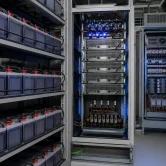

Batteries Show Up in ESG Reporting
ESG frameworks weren’t written with UPS banks in mind. But once you look at what they actually require, battery infrastructure lands in multiple places.
Take the GRI Standards, used widely across the GCC. They require disclosure on waste generation, hazardous material handling, and material sourcing. A VRLA battery contains lead and sulphuric acid. A lithium-ion system contains cobalt. These are regulated materials. Where they go at end of life is a reportable event.
Scope 2 emissions — purchased electricity — is another one. A facility running an oversized, degraded UPS bank at constant standby load has a different carbon footprint from one running a correctly sized, monitored system. And a BESS that displaces peak grid draw cuts your Scope 2 numbers directly, in a way you can calculate and record.
Then there’s governance. An ESG auditor can tell the difference between a company with a battery lifecycle register and a disposal programme and one that replaces batteries when they die and figures out disposal later. That difference shows up in the audit.
Disposal: The Gap Most Businesses in Qatar Currently Have
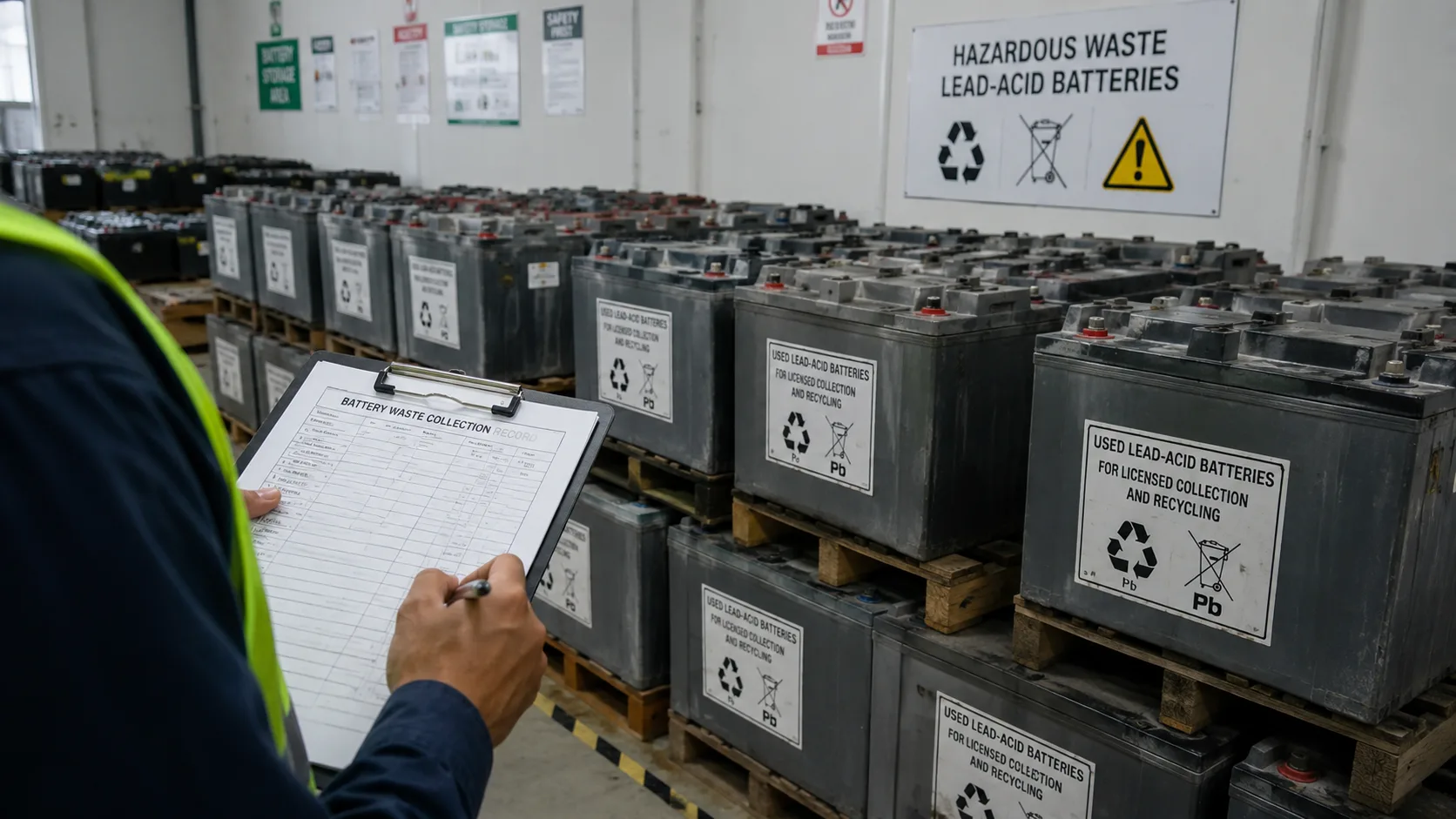
What responsible disposal documentation includes the following:
- Date and site of removal
- Battery chemistry, quantity, and weight
- Name and licence details of the collecting party
- End destination — recycler, refiner, or reprocessor
- Certificate of disposal or recycling confirmation
Qatar goes through a large volume of UPS batteries every year. Data centres, telecom towers, industrial facilities, commercial buildings — all of them cycle through VRLA banks that typically last 2 to 3 years in this climate, shorter than the 5-year design life on the spec sheet. That’s a lot of batteries. Most of them don’t currently have a documented chain.
Have old UPS or industrial batteries sitting on-site? Techlinqx buys used batteries across Qatar and handles the full removal and documentation chain.
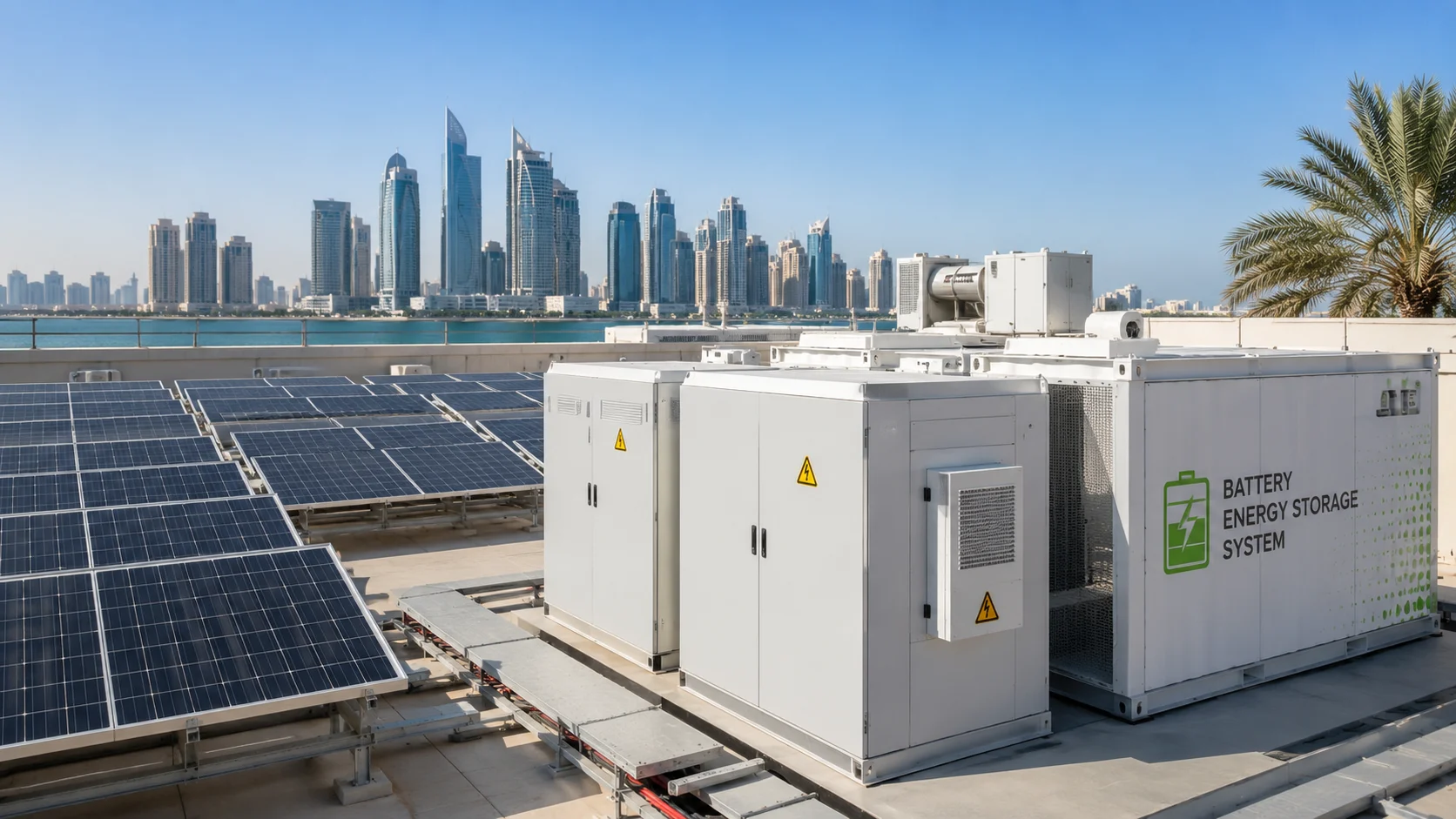
How Battery Energy Storage Supports the ‘E’ in ESG
Peak shaving and Scope 2
Qatar’s grid peaks between roughly noon and 6pm in summer, when the cooling load is at its highest. That’s also when the grid’s own carbon intensity is at its worst. A BESS charged overnight and discharged during those afternoon hours reduces your facility’s real-time grid draw at exactly that window. The kWh displaced are measurable. The Scope 2 reduction is calculable. And unlike a lot of sustainability commitments, this one is verifiable from metre data.
Solar self-consumption
For businesses with rooftop solar, a BESS makes the generation actually usable. Solar peaks midday; demand peaks mid-afternoon. Without storage, surplus generation either goes back to the grid or gets wasted. With storage, it gets used later — which raises the self-consumption ratio and reduces net grid dependency. Both show up in Scope 2 accounting.
QNV 2030 alignment
Qatar’s NCCAP targets a 25% reduction in national GHG emissions against 2019 levels by 2030. For businesses with government contracts, investor relationships, or procurement dependencies that require ESG documentation, alignment with this national target is increasingly practical — not just aspirational. A BESS installation with performance monitoring data is an auditable contribution to it. A generator that runs during outages, with no storage layer, is not.
Battery Management as an Ongoing Programme, Not a One-Off
Most businesses in Qatar manage batteries reactively. A bank fails. Someone gets called. Replacement batteries arrive. The old ones get dealt with somehow. This works operationally, most of the time — until it doesn’t, and until someone asks for the paperwork.
What ESG reporting requires is different: a programme that generates records continuously, not just when something goes wrong.
Health monitoring
A degraded battery bank draws the same standby power as a healthy one but delivers less when it’s needed. Monitoring that identifies weak cells early does two things: it reduces energy waste (a Scope 2 benefit) and it gives you performance data for reporting. Battery health isn’t just a maintenance question — it’s an energy efficiency record.
Lifecycle tracking
A lifecycle register — installation date, chemistry, connected system, and expected replacement date — lets you plan disposal events rather than react to them. In Qatar, that replacement cycle is roughly every 2 to 3 years for VRLA, not the 5 years the spec sheet might suggest. Plan for that cadence and you can arrange responsible collection in advance. Don’t plan for it, and you’ll end up with a storage problem and no documentation.
Procurement standards
Where batteries come from matters for ESG. Sourcing from manufacturers with ISO 9001 quality management and documented environmental certification gives you something to record in the supply chain section of your disclosure. It’s not a major burden. But it’s a gap that becomes visible when you’re working towards formal reporting.
Techlinqx provides battery lifecycle support across Qatar — monitoring, planned replacement, and documented collection through our used battery service. Talk to us about setting up a programme rather than managing each event separately.
The Documentation That Makes Battery Actions Count for ESG Reporting
ESG reporting is an evidence exercise. Doing the right thing matters. Being able to prove it is a separate task.
An ESG auditor working to QSE guidelines or IFRS S1/S2 disclosure standards will ask for specific records. Here’s what battery-related documentation needs to cover:
Disposal records
- Date, site, battery type, quantity, weight
- Collecting party name and licence details
- End destination confirmation (recycler / refiner / reprocessor)
- Certificate of disposal or recycling confirmation
BESS performance records
- System capacity and commissioning date
- Monthly charge/discharge cycle data
- Peak grid draw reduction (kWh) for Scope 2 calculation
- Annual performance vs pre-installation baseline
Procurement records
- Manufacturer name and country of origin
- Battery chemistry and regulatory classification
- Supplier environmental and quality certifications
If you’re working towards QSE disclosure or responding to investor due diligence, this documentation is what turns operational actions into reportable ESG performance. The businesses that have been collecting these records for two or three years will have a real advantage over the ones that start when disclosure becomes mandatory.
FAQ
How does battery management connect to ESG targets in Qatar?
Is battery disposal regulated in Qatar?
Can a BESS reduce a Qatar business's carbon footprint?
What is Qatar's national GHG reduction target?
Is ESG reporting mandatory in Qatar yet?
How do I find a responsible used battery buyer in Qatar?
Worried Your UPS Battery Is on Its Way Out?
Techlinqx supplies, tests, and installs UPS batteries across Qatar — with load bank testing to confirm exactly where your battery stands.