
Qatar’s climate changes everything about how a UPS installation should be approached. Batteries are at risk of damage due to high temperatures, dirt infiltrating every aspect of the installation, and failed installations pose a risk of dark data centres, power failure for hospitals, and disconnected telecoms. Therefore, proper installation is vital. The purpose of this guide is to provide you with information about what you need to do prior to beginning your UPS installation process and how to determine if an installer has experience in this type of work in Qatar’s environment by looking for errors that lead to early installation failures and what separates a UPS supplier in Qatar who will provide complete service versus a poor UPS supplier who simply delivers the equipment.
1. Why Qatar’s Conditions Make UPS Installation Different
Many UPS manufacturers have their products tested in a laboratory environment with a constant temperature of between 20°C and 25°C, low humidity levels, and very clean air. Conversely, Qatar’s average summer temperature runs from 45°C to 50°C; it is also filled with dust, and the humidity level fluctuates depending on the season. These conditions can all significantly impact the lifespan of a UPS battery, how well the cooling systems in a UPS work, and how often maintenance is required.
A UPS that will have a typical lifetime of 10 years in a temperate climate can potentially give you a five-year lifetime in Qatar if not designed and maintained properly. UPS battery life decreases rapidly above 25°C, decreasing by approximately half for every additional 10°C above the recommended maximum temperature rating.
This means if you have your UPS batteries in a server room with a temperature of 35°C, and the UPS batteries are located near a wall or in a corner with no airflow, you will be losing several years of battery life before you even have your first power outage.
This is the starting point for any serious UPS installation in Qatar. ou are not just installing a UPS unit, but also you are building a complete system to withstand environmental conditions that manufacturers do not normally design for in their product specifications.
2. What to Check Before UPS Installation Starts
The biggest installation mistakes don’t actually show up while you’re installing. They show up before any single cable gets touched, like before you even pick up the tools. Basically, here’s what needs to be looked at and confirmed, maybe rechecked, before work starts.
Hot Aisle Containment Is Not Optional at High Density
First thing, you need a real assessment of the site. Not “close enough” around the room. You have to check the ambient temperature at the actual location where the UPS will sit – not the data centre averages but the specific spot. You also need to look at airflow, spot heat sources nearby, and verify the floor can take the load, meaning it has to handle the weight of the gear.
In Qatar and other Middle Eastern countries, many buildings may appear to be suitable for installation; however, not every building has the same level of air conditioning throughout its lifetime. For example, there may be a difference in temperature from month-to-month between these systems because the temperature within these buildings may change dramatically throughout the year due to weather conditions. Failure to properly plan the installation of a UPS system to accommodate these types of annual seasonal temperature fluctuation may result in having issues after the unit has been installed at its final destination.
Load Calculation
To properly size a UPS, you need to calculate your actual load, not rely on an estimate, or simply add together maximum ratings of all equipment. If you choose too large of a unit, you will be paying for excess capacity that does not get used; if you choose too small of a unit, your UPS will be continuously overloaded, and this will shorten the life of the battery and may hinder your ability to start up larger pieces of equipment if they have a startup surge.
An ideal load calculation should examine the connected equipment, startup currents, power factors and anticipated future expansion (for 3–5 years). While not difficult to perform, the load calculation must be properly completed before specifying the UPS and not after the unit has been purchased.
Electrical Infrastructure
It is important to compare the current electrical infrastructure against the requirements of the UPS installation. This includes checking the input cabling, circuit ratings, earthing systems, and bypass configurations. In older buildings in Qatar, the earthing is not always adequate for a new UPS installation, which can cause delays and add to the cost of the UPS installation.
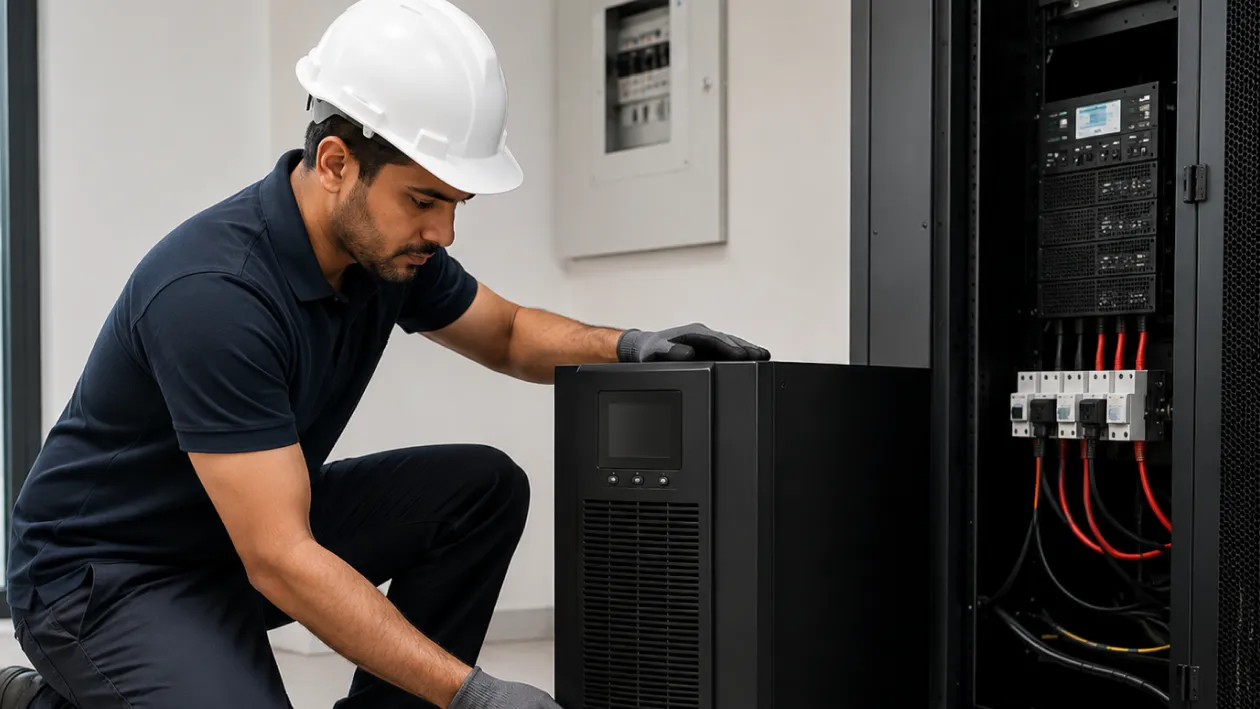
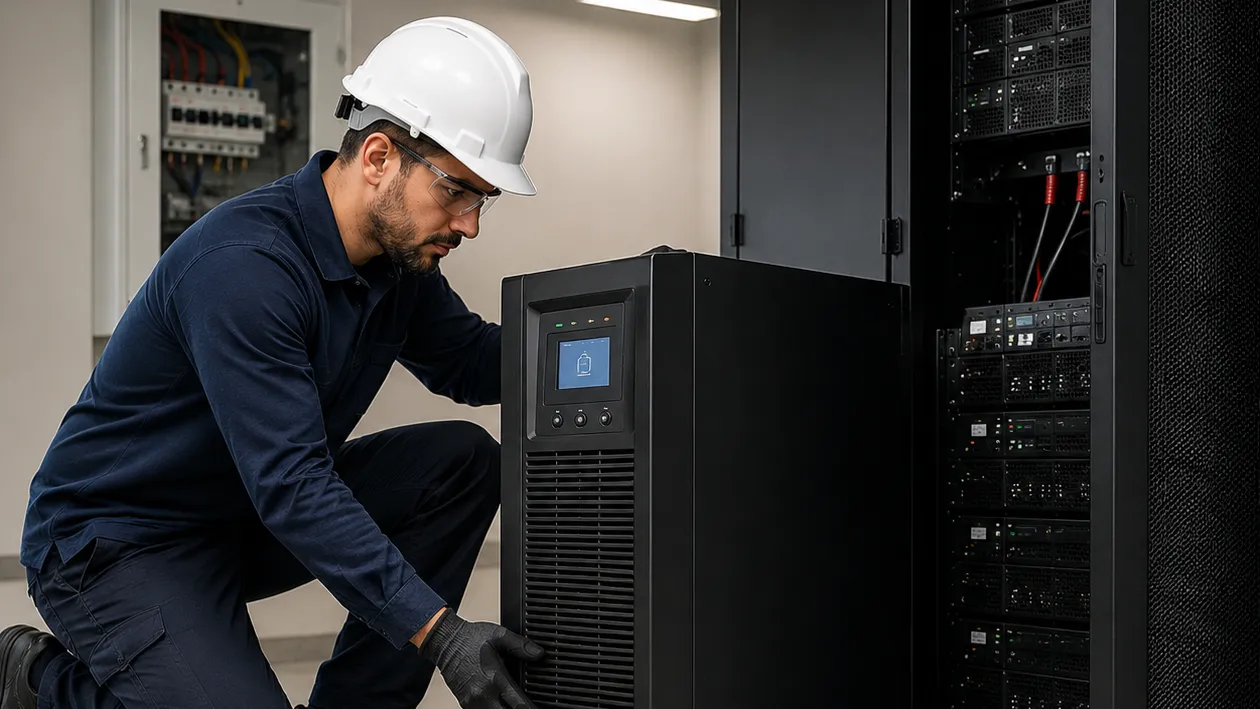
Checklist: What to Confirm Before UPS Installation in Qatar
- Ambient temperature at the exact installation location in peak summer
- Available floor load capacity
- Airflow and cooling adequacy for the UPS and battery cabinet
- Accurate connected load calculation
- Input cable and breaker ratings
- Earthing system condition
- Bypass and maintenance isolation requirements
- Access route for equipment delivery and future maintenance
3.The Most Common UPS Installation Mistakes in Qatar
These aren’t edge cases. They come up regularly, and most of them are entirely avoidable.
Installing Without a Site Assessment
Many UPS units are installed on site by engineers who never visited the physical location prior to delivering the unit. The engineers make assumptions based on a floor plan and install the UPS where it will fit, rather than installing it in its proper location. Installing a battery UPS in the climate of Qatar without site visits will lead to battery failure earlier than expected.
Wrong Battery Configuration for the Operating Temperature
VRLA batteries are generally rated for use at 25 °C. An increase in temperature to 35 °C will cause the battery to have an average life of half of what it would normally have at 25 °C. Increasing the temperature to 40 °C will decrease the life of the battery further. Therefore, if a UPS system does not have the proper battery type for the temperature at which it is being installed, or does not have adequate cooling installed, you are purchasing batteries that will fail long before they have reached their average life expectancy.
Skipping Load Bank Testing at Commissioning
At the time of installation, a UPS can visually appear to be functional, have powered-up cleanly, display a green light, yet eventually fail to provide rated power under normal operating conditions. When load bank testing is performed at the time of installation, the system is subjected to an actual electrical load to confirm it is functioning as designed. This process will expose weak batteries; identify problems with connections; uncover configuration discrepancies; in other words, this process will out any issues prior to experiencing an actual power outage. The majority of installations skip this step due to the cost of time and equipment. This practice is false economy. The cost associated with a failed UPS will far exceed the cost of conducting a commissioning test.
No Maintenance Plan After Installation
A UPS is not a set-and-forget device. Over time, battery degradation; connector loosening; filter clogging; and capacitor aging will occur. When predictive maintenance is not performed under a scheduled plan, most of these conditions will go undetected until the UPS has failed. Due to the extreme heat in Qatar, degradation will occur at a much more rapid pace than in other climates. The installation is merely the beginning of the life cycle of an UPS system; without properly maintained, your UPS system will not function as reliable in the future.
Using Subcontractors Who Don’t Know the Equipment
Many suppliers in Qatar sell the UPS and outsource their installation to whoever is available. The subcontractors may be experienced electricians, but they may not have been properly trained on the UPS brand being installed. Manufacturer certifications exist because of this: commissioning procedures, parameter settings, and bypass configurations are all unique to the product family. Getting these parameters incorrect does not cause immediate problems; they will typically show up at the time of a power outage.
4.What a Correct UPS Installation Process Looks Like
The correct method for installing UPS in Qatar is a well-defined process. Each phase of this sequence relies on the completion of the prior phase, and nothing is approved until verified.
- Phase 1 – Site assessment. Review the site to determine the environment, calculate how much power the UPS will provide, and verify the structure's capability to support an UPS.
- Phase 2 - Equipment specification. Determine the size of the UPS, the type of battery based on the battery’s operating temperature, and how to bypass the UPS.
- Phase 3 – Preparation of the civil and mechanical aspects of the installation. Reinforce the floor if necessary (e.g., if the UPS is heavy, provide a method of conveying cables, and provide a cooling method for the UPS.)
- Phase 4 – Equipment delivery. Determine how to get to the equipment, how to lift the equipment, and where the equipment will be ultimately placed.
- Phase 5 – Electrical connections. Connect input cables, distribute output cables, provide an earthing/grounding system, and provide bypass wiring.
- Phase 6 – Configuration. Configure the UPS asnd set parameters, configure alarms and install communications.
- Phase 7 – Testing. Test at full rated load with documents verifying results.
- Phase 8 – Battery discharge tests. Verify that the batteries will run according to the manufacturers’ specifications.
- Phase 9 – Commissioning. Verify that each of the parameters set during configuration is correct according to the Project Specification.
- Phase 10 – Handover documentation - as-built drawings, test records, commissioning certificate, and warranty registration.
Every step produces paperwork, even the smaller checks. So when the job is done, you end up with a traceable record of what was installed, what was tested, and what results were documented. That matters later for warranty claims, insurance purposes, and even future maintenance visits, because you can always go back and see exactly what happened.
5. How to Choose the Right UPS Supplier in Qatar
What actually separates a capable supplier from one that will create problems for you later?
They Have Brand-Specific Certifications
Your installers should have the manufacturer’s certification to install your UPS system — for example, from Eaton, Vertiv, or APC. Certifications indicate that the installer has been trained on the commissioning process, fault codes, battery management setting, and bypass procedure for that equipment. Without these credentials, one could only guess about how to correctly install the equipment.
They Perform Their Own Installations — No Subcontracting
Ask them directly if they will perform the installation themselves or if they will use a subcontractor to complete the scope of work for you. A supplier that uses their own certified installation team in Qatar is accountable for all aspects of your project — from the quote to the handover. A supplier who uses a subcontractor shifts the risk of the project to an organisation that has less vested interest in the successful completion of your job.
They Provide Full Commissioning Documentation
After the installation is complete, you should receive the complete commissioning document (not just a signature on the deliverable), including all test results, parameter settings, battery baseline readings, and load test data. If a supplier does not give you the documentation, they either did not perform the testing, or they failed to document the testing. Either way, this could lead to problems for you later on.
They Offer a Preventive Maintenance Programme
An installer who installs and disappears is only providing a solution for part of the issue. Right partner will continue their involvement, having a scheduled proactive maintenance plan in place so that the UPS continues to perform like the day it was installed.Given the weather conditions in Qatar, this is a necessity.It’s what keeps your investment working for its full intended life.
They Understand Qatar’s Specific Conditions
This part matters more than it sounds. A supplier with real on-the-ground experience in Qatar understands how heat changes battery selection, how dust interferes with cabinet ventilation, and how to size systems for sites that run 24/7 through 45°C summers. Their knowledge will show in the quality of site assessment, the equipment specification and the maintenance recommendations.
6. Final Thoughts
A UPS installation in Qatar is not like purchasing any other product. While equipment is important, the installation process carries just as much weight. A properly specified, correctly installed, and well-maintained UPS will operate effectively for ten years or longer to protect critical operations. Conversely, an improperly specified UPS, one that did not undergo site assessment prior to installation, or an installation performed by an unqualified subcontractor will fail at the most inconvenient and critical time.
While this checklist is not exhaustive, it lists the most significant factors in making your UPS purchasing decision. Go through the checklist prior to making a commitment to a supplier or specification for your UPS. If you are looking for a completely managed UPS supplier in Qatar, including supply, installation, commissioning, and ongoing maintenance, Techlinqx’s field engineering team is available for site assessments across Doha and Qatar.
FAQ
How long does UPS installation take in Qatar?
business days. Techlinqx will provide you with a detailed project timeline following the site assessment to ensure you do not encounter any unexpected delays on the date of the scheduled installation.
Does heat impact the life of a UPS battery as much in Qatar as it does elsewhere?
What is load bank testing and do I need it?
Can I use any electrician for UPS installation in Qatar ?
How do I find a reliable UPS supplier in Qatar?
How often should a UPS system be serviced in Qatar?
will have its components tested, batteries tested for health, cleaned, and documented.
Need UPS Installation in Qatar?
We have certified professionals who can do all types of installations of UPS systems in Doha and throughout Qatar.from site assessment and equipment supply through to commissioning and ongoing preventive maintenance.Our engineers do the whole thing, start to finish , no subcontractors involved.