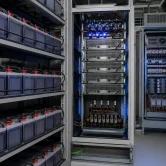

You’ve found the battery, you have all of its specifications and now you are prepared to install. However, if you have not previously had experience installing a battery in Qatar or if you have installed a battery and it has not performed for as long as anticipated based on the manufacturer specifications, there is a good chance that your installation did not go as smoothly as was described in the manufacturer’s instructions.
Batteries do not fare well in the Qatar environment. The interior temperature inside a non-air-conditioned cabinet can climb to 55°C in July, and thats just the starting point. Dust infiltrates all aspects of the battery; and electrical fluctuations are more common than most individuals will acknowledge. A battery installed without consideration for these conditions is destined for failure.
This article will help you understand what is important in battery installations in Qatar, including the type of battery selected, along with detailed information on how to complete the battery installation without cutting corners and possibly jeopardizing your installation.
1. Why Battery Installation in Qatar Is Different
First of all, temperature is an obvious reason that makes battery installation in Qatar differ from other areas of the world. With summer temperatures in Qatar commonly exceeding 45°C outside, it can be unbearable to work within a server room or utility closet that has poor ventilation to keep cool. Heat is the single largest enemy to batteries.
Most all batteries, especially VRLA batteries commonly used in UPSs, perform best at an operating temperature of 20°C to 25°C. For each increment of 10°C above the manufacturer’s temperature rating, the estimated lifespan of the battery decreases by approximately 50 percent. This is not just an estimate; it is clearly outlined in every manufacturer’s literature under the Arrhenius Rate Rule.
In addition to temperature, some of the other environmental factors which affect battery installation in Qatar are humidity from the coastal area’s summer weather, fine dust from the desert which clogs vents and enclosures, and fluctuating grid voltage; all of which put additional strain on VRLA batteries installed in Qatar. Therefore, if a battery installation is to be completed according to guidelines in Qatar, all of these factors should be taken into consideration; one cannot simply connect batteries and hope for the best.
2. Choosing the Right Battery Type for Qatar’s Environment
Choose the right battery type for your application before you begin installation. This is where many businesses get it wrong; some companies buy the lowest-priced battery or select what the catalog says without considering what type of environment it will be used in.
Some common battery types that are widely used in UPS and backup power systems (both commercial applications) in Qatar include:
VRLA/AGM Batteries (Valley sealed lead acid/ Absorbed Glass Mat)
These are probably the most commonly used batteries in both commercial and residential UPS and backup power systems across Qatar. They are generally maintenance-free and can accommodate many different types of commercial applications. One drawback is that they tend to be very temperature-sensitive, meaning that if you do not have good temperature control at your location, your battery will age much more rapidly than the manufacturer has advertised.
Gel Batteries
Compared to standard AGM batteries, gel batteries perform better in a high-temperature environment. They will typically take longer to charge, but if your application is in a hot, dusty environment with infrequent discharge cycles, gel batteries may be the better battery option for your installation in Qatar.
Lithium-Ion (LiFePO4) batteries
Many companies are beginning to use lithium-ion batteries in industrial and telecommunications applications. They are less sensitive to high-temperature environments, will last longer, and weigh significantly less than VRLA or gel technologies. Lithium-ion batteries generally have a higher initial acquisition cost than other technologies; however, the total cost of ownership over 8–10 years is generally lower (especially when you consider the number of replacement batteries you would need).
Ultimately, the best option for you will depend on your load type, your ambient temperature, your budget, and how frequently your battery will be used.
3. What a Pro Battery Installation actually involves
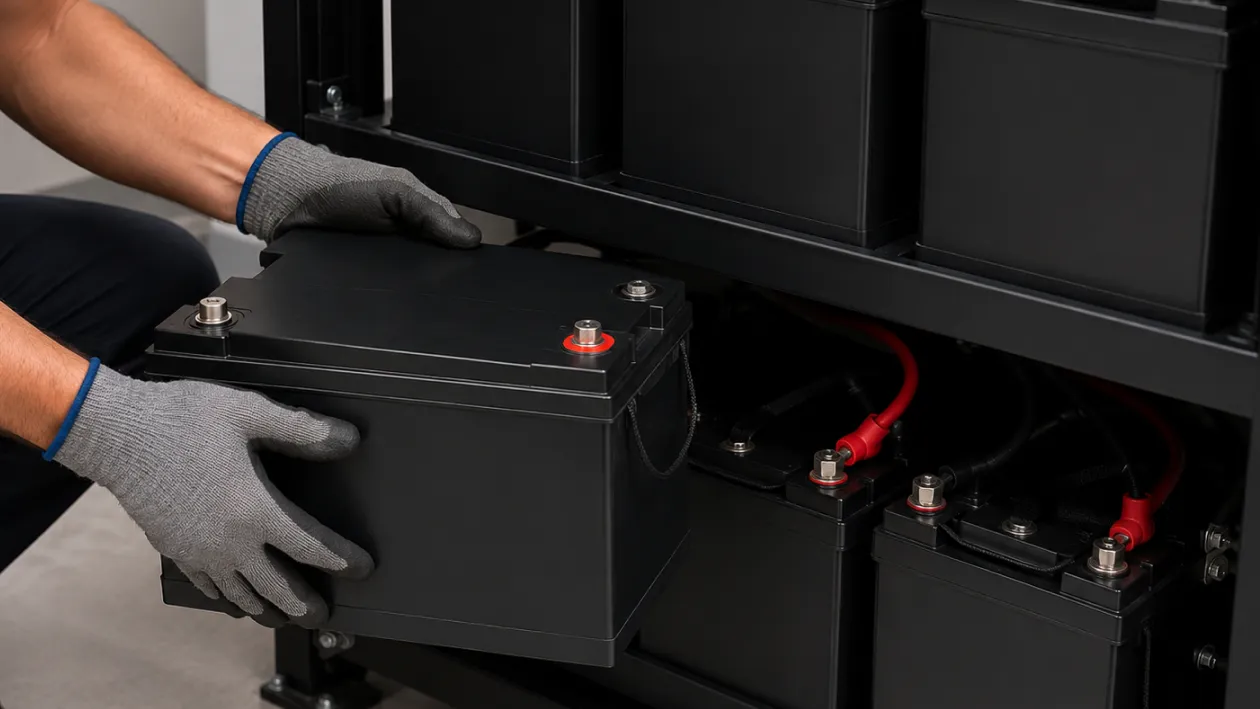
People sometimes assume installation is just a kind of swap— you pull the old one out, put the new one in, and call it done. For a small UPS in an office maybe, but for anything larger, like a server room, a telecom cabinet, an industrial power setup, the process is kinda more layered than that.
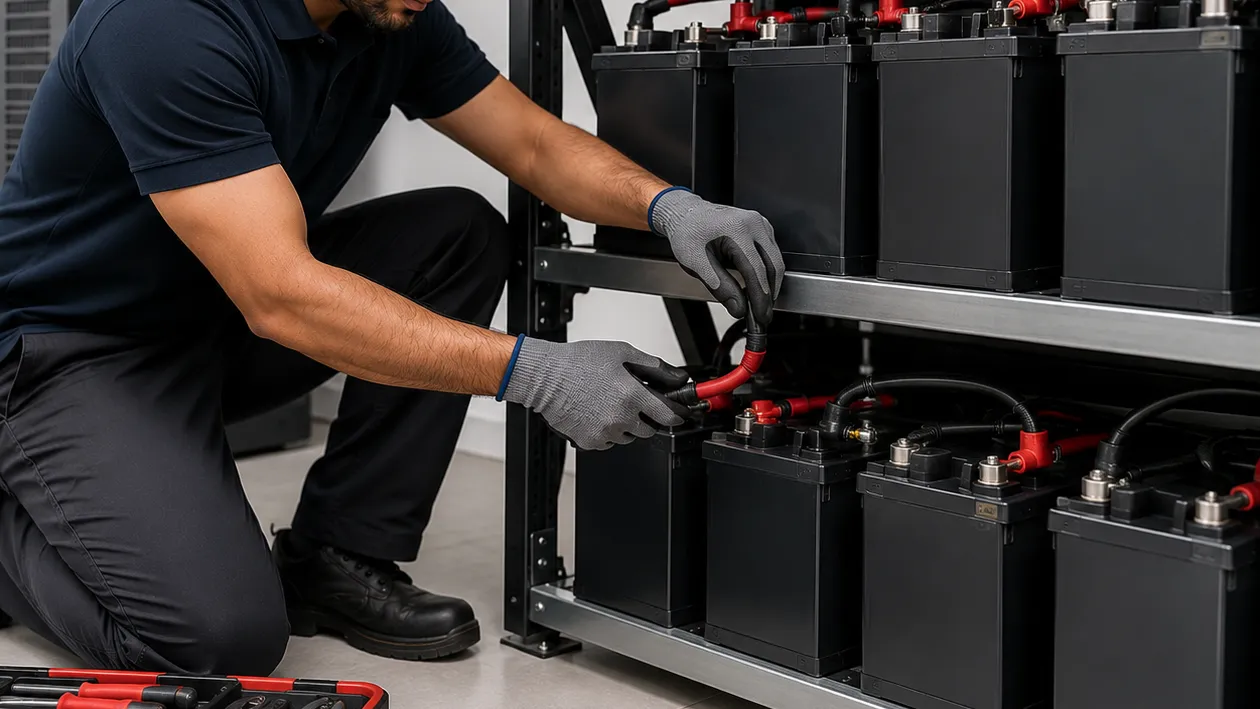
Here is what a proper battery installation in Qatar should really include, not just in theory but in practice:
- Site assessment: Checking ambient temperature, ventilation, the usable space, and what’s already there in terms of wiring, before any battery even arrives on site.
- Load calculation: Making sure the battery capacity lines up with the real load — not only with what was estimated earlier. Loads shift. New equipment gets introduced. The battery bank has to fit today’s situation, not the spec from like three years back.
- Cable sizing and routing: If cables are too small, you can see voltage drops and heat buildup. This shortcut is super common, and it can become one of the most expensive mistakes.
- Terminal torque: Battery terminals come with torque guidance for a reason. If you tighten too much, you risk cracking the terminal. If you don’t tighten enough, you can end up with resistance, heat, and later a loose connection. Either path pushes premature failure.
- TInitial charge and commissioning: A new battery shouldn’t jump straight into discharge. It needs a proper charge cycle first, plus voltage and current checks against the manufacturer’s stated specs.
- Documentation: Recording installation date, battery type, load readings, and the next service window. This is what keeps maintenance calm and planned, instead of waiting for issues to pop up. If you skip even one of these parts, then honestly you’re not really doing a battery installation — you’re just trading one problem for another.
4. Costs You Should Know Before You Start
Battery installation costs in Qatar can swing a lot, depending on what battery type you choose , the overall system size, and also how complicated the site really is. So yeah, the picture is kind of mixed , but here is a rough idea:
- For small UPS systems (home or small office): It’s usually pretty straight forward. Battery replacement tends to be quick and the expense stays on the lower side. In practice, the biggest variable is the battery price itself.
- For commercial UPS systems (about 5–40 kVA): The setup takes more time, you need the right tools, and sometimes the work has to happen in a live environment. In other words, labour plus commissioning time can add up faster than people expect.
- For industrial or telecom battery systems: this is a different scale. You’re dealing with bigger battery banks , higher voltages, and installation that feels more intricate. Most of the time it means a proper team, safety gear that’s actually used, and detailed commissioning documentation.
- One thing many people miss:the price of “getting it wrong” . A battery that was installed poorly and then fails at 18 months instead of 4 years, that is not a bargain. It becomes a cost multiplier, in a very real way.
So ask your supplier for an itemised quote that clearly breaks things down—battery cost, installation labour, commissioning, and any disposal fees for older batteries. If the quote stays vague, you’ll usually get the unpleasant part later.
5. Common Battery Install Errors in Qatar
The following are some of the issues most commonly encountered in service calls, early failures, and equipment that fails to perform as intended:
- 1 - Installing batteries in hot or unventilated areas will severely reduce their service life. If the room is not air-conditioned, expect reduced battery life.
- 2 - Mixing old and new batteries together is a common practice that always ends up leading to poor performance. Old batteries will drag down the new battery. When only replacing some of the batteries in the bank, all of the old batteries need to be replaced at once.
- 3 - Not performing load calculations is a common mistake in battery installations. If batteries are sized incorrectly, the new batteries will not perform to their full potential. Load calculations must be performed regularly; every time there is a battery replacement.
- 4 - Following battery installations, battery maintenance must be conducted on a regular basis. Battery maintenance is not a set-it-and-forget-it function. It is necessary to perform periodic voltage checks, terminal inspections and capacity tests to ensure that the installation is functioning properly.
- 5 - Buying batteries based solely on cost is a poor way to select batteries. Most low cost batteries are from non-established manufacturers and typically have actual capacities that are less than the intended capacity and typically fail at a higher rate when subjected to elevated temperatures.
Lastly, if there is an issue with the battery, most low cost batteries do not offer support through local distributors.
6. When You Should Hire an Expert (and When You Shouldn’t)
Not all battery installations require hiring an expert. For example – replacing batteries in a small 600Va UPS at home, most can do themselves with some precautions.
However, you should hire an expert when:
- Installing Large load (over 5Kva)
- When there is a Battery bank containing multiple batteries connected in series or parallel
- New installation located in a data center/server room and/or telecoms environment
- Battery located in a live environment and unable to de-energise safely
- First time installation of power to a new facility where the loads have not been confirmed.
Additionally, in Qatar you want to choose an installer familiar with the local environment and not just general specifications. A technician who has completed many installations under the hot summer conditions in Doha will probably catch things that a typical electrician would not.
7. Final Thoughts
Battery installation in Qatar isn’t really complicated, but it can be pretty unforgiving when you rush it or do it carelessly. The heat, the dust, and the entire electrical environment, all of that means you end up with way less margin for error than you’d see in a cooler climate.
Choose the correct battery for your application, have it installed correctly – with a load check, proper wiring and commissioning test – and follow a scheduled maintenance program. This is not overthinking; it is just how to maximize battery life. If you are considering a battery installation in Qatar Techlinqx can assist you with the entire process from selecting the battery to site installation and ongoing support.
FAQ
How long does battery installation in Qatar usually take?
Do I need a permit for battery installation in Qatar?
What battery types does Techlinqx supply and install in Qatar?
How often should a battery installation be serviced after setup?
Can Techlinqx handle large scale battery installation projects in Qatar?
Ready to Get It Done Right?
Techlinqx takes care of battery installation in and around Qatar — Whether you need one backup solution or an entire industrial bank of batteries, we can provide the proper assessment of your jobsite and identify the right battery type based on the load placed on the battery as well as the location/environment of the battery. We will commission everything, ensuring that each installation functions as intended by the manufacturer. No shortcuts, no estimation. Say hello to our team and let’s sort it out.