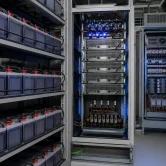

Your data centre is running like clockwork. Then an unexpected incident happens: the grid dips at 2 A.M., and suddenly you’re struggling to keep everything working by just some ageing batteries – ones that were acquired before your existing IT staff were even born.
In Qatar’s industrial and commercial sectors, this situation is far from hypothetical. It’s a standard Tuesday.
The moment you choose between VRLA vs lithium batteries, it’s more than a procurement decision. It’s a decision whether to have a controlled switchover or experience an unintended outage of your entire grid infrastructure (systems) and lose your entire business reputation.
This guide breaks down both technologies honestly, so you can make the right call for your facility.
What Are VRLA Batteries?
VRLA (Valve Regulated Lead Acid) has been used to power industrial backup systems for many years and is still used in many locations, from telecom towers to the generator room of hospitals.
There are two main types of VRLA batteries:
- AGM (Absorbed Glass Mat), wherein the electrolyte is stored in fibreglass mats. AGM batteries perform well with high discharges and are commonly used in UPS systems.
- Gel in which the electrolyte has been thickened into a gel. Gel batteries work better with long, slow discharges and are commonly used in solar power systems.
VRLA batteries have earned their place as reliable power sources since they are sealed, maintenance-free (practically), and relatively inexpensive; however, the downside is that they do not last well when exposed to extreme heat.
In Qatar’s summer temperatures, which commonly exceed 45 degrees Celsius, the lifespan of VRLA batteries will be lessened even more as the average life span is only 3-5 years, and they can sometimes fail unexpectedly without warning at all, leaving a bank of batteries that look good on paper but are not able to perform when needed.
What Are Lithium Batteries?
The introduction of lithium-ion batteries in critical power through lithium iron phosphate (LiFePO₄) for industrial applications has been a game changer that has already replaced VRLA batteries in data centres, hospitals and telecom infrastructure throughout the GCC.
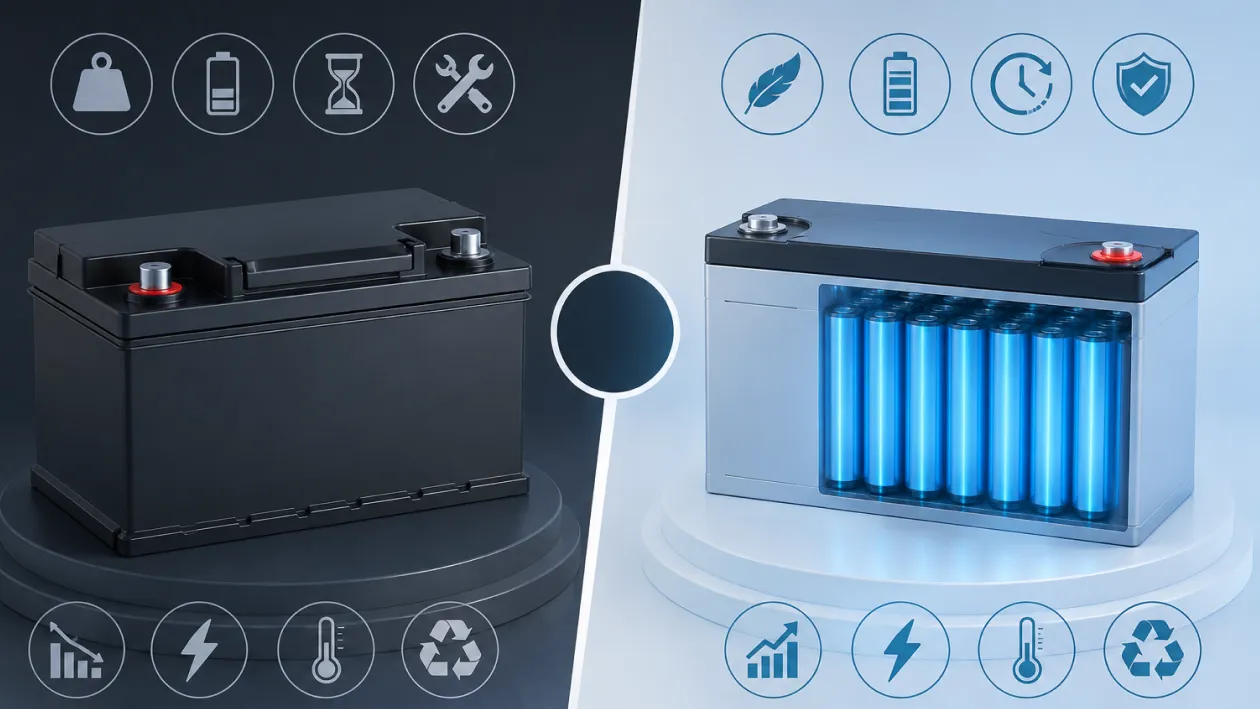
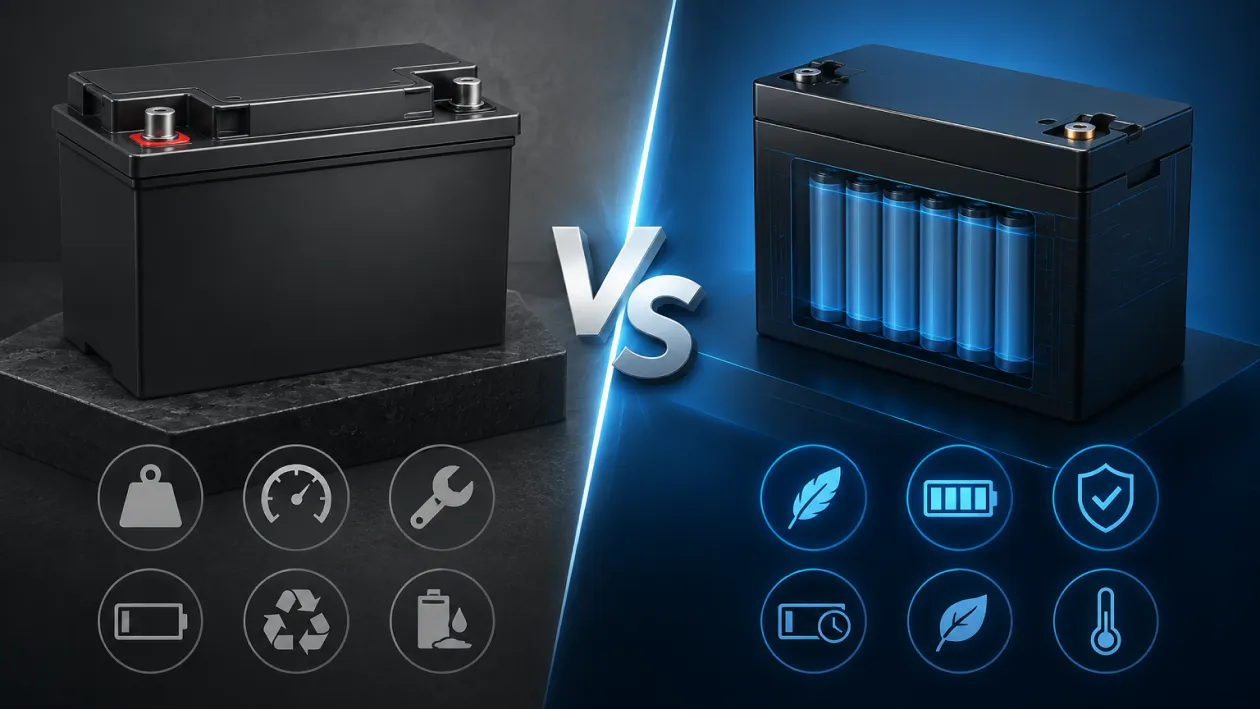
When comparing performance, the differences are staggering:
- Lifespan – Lithium-ion batteries have a lifespan between 8 and 15 years, whereas VRLA batteries typically last 3 to 5.
- Charge rate – A lithium-ion battery recharges back to full capacity (100%) within 1 to 2 hours, whereas a VRLA battery takes 8 to 10.
- Weight – Lithium-ion batteries weigh between 60% and 70% less than VRLA batteries, which is especially critical when retrofitting rack-mounted uninterruptible power supply (UPS) units.
- Depth of discharge – Lithium-ion batteries can safely be discharged to 80% – 90% of their total capacity, while VRLA batteries can only be discharged to 50% of their total capacity.
- Temperature performance – Lithium-ion batteries perform significantly better than VRLA batteries in high ambient temperatures.
The downside to lithium-ion batteries is that they have a higher upfront cost. The upside, however, is that the total cost of ownership over a 10-year period will almost always favour lithium-ion, due to the fact that there will be fewer replacements and the need for less cooling, as well as no maintenance cycles.
VRLA vs Litium Batteries: Full Comparison
| Feature | VRLA Battery | Lithium Battery |
|---|---|---|
| Lifespan | 3–5 years | 8–15 years |
| Weight | Heavy | 60–70% lighter |
| Depth of Discharge | 50% | 80–90% |
| Charge Speed | Slow (8–10 hrs) | Fast (1–2 hrs) |
| Temperature Tolerance | Moderate | Excellent |
| Upfront Cost | Low | Higher |
| Total Cost of Ownership | Higher (short cycles) | Lower (long-term) |
| Maintenance | Low | Near-zero |
| Environmental Impact | Lead disposal concerns | Cleaner lifecycle |
What Type of Battery Suits Your Facility?
There is no universal answer to the VRLA vs lithium batteries debate.There are, however, some clear guidelines.
VRLA:
- If your company has limited cash and a very short project schedule.
- If your backup runtime needs to be less than 15 minutes.
- If you are looking to put batteries in an existing legacy system with very little space for new infrastructure
- If the batteries are to be installed in temperature-controlled rooms with temperatures consistently below 25 degrees Celsius.
Lithium:
- If your facility operates 24/7 and is not able to afford downtime.
- If you operate in Qatar (industrial/commercial), where high ambient temperatures exist.
- If you want to eliminate operational costs (fewer replacements and eliminate watering cycles and corrosion checks).
- If you will be planning for 10+ years instead of 3 years.
For most new installations in Qatar’s data centres, manufacturing plants and commercial buildings, lithium will be the better long-term investment. However, it is always advisable to have your battery supplier in Qatar verify that your load profile meets the performance requirements of your facility before you make a decision.
Why Qatar’s Climate Changes the Equation
The average temperature for testing battery performance is 25°C. From May to October, Qatar hardly experiences 25°C.
For VRLA units, every 10°C above that baseline roughly cuts the battery’s rated lifespan in half. So if your UPS room sits around 35°C, which happens in plenty of facilities without precision cooling, your supposed 5-year battery can end up acting like a 2.5-year battery. And when you’re at 45°C, say in an outdoor or semi-outdoor enclosure, you’re basically staring at failure in under 18 months.
Lithium-ion batteries have a much wider thermal management range and are controlled through integrated battery management systems (BMS) that actively limit battery cell thermal stress. The use of lithium-ion batteries does not completely eliminate the problem of thermal management in battery systems, but it does significantly reduce the chances of a failure.
For this reason, selecting the appropriate energy storage system (batteries) for installation in Qatar requires taking into consideration the environmental conditions and not just the technical specifications.
What to Ask Your Battery Supplier
Ask your supplier specific questions before you sign anything:
- What is the battery's rated capacity at 40C and not just at 25C?
- What certifications do you have? IEC/UL/CE and local Qatar/GCC standards location?
- What are you covered under your warranty? Capacity fade? Thermal Events? Prorated Replacement?
- Do you provide on-site tests and load bank verification after the installation is complete?
- How long does it take for you to respond to a call out in Doha or an industrial area like Mesaieed?
A seller who cannot confidently answer these questions should not be considered a business partner. A reputable battery supplier in Qatar will have done this enough times to guide you through answering these queries quickly and with full confidence.
Final Thoughts
The VRLA batteries form the backbone of Qatar’s current infrastructure and are a well-established and economical option for large-scale battery installations. However, when considering the speed at which battery cycles are being shortened, there is a difference between being “affordable to buy” versus being “economically viable long-term”.
While lithium batteries may have a higher price point to begin with, they also have a longer life cycle, perform better at higher temperatures, have significantly faster charge times and require much less maintenance than VRLA batteries. Therefore, for most large-scale installations in Qatar, the conclusion drawn is that, although lithium batteries are not currently considered “fashionable”, the numbers clearly indicate they are a far better option.
When making your choice of battery technology, ensure that you base that decision on actual load data and actual ambient temperature readings from your own facility, and make sure your supplier has past experience working within the Qatari market.
Techlinqx supplies and installs both VRLA and lithium battery systems across Qatar. Contact our team to help determine which type of battery would best suit your needs prior to making any commitment or purchase.